iPersonic Blog

Career and life advice by Felicitas Heyne

Start by taking our free personality test now!

How to fight procrastination

Whatever you can do today can surely be put off till the day after tomorrow as well … or something like that. Who of us is not familiar with that thought and especially where it concerns something unpleasant, tedious or boring or, to make matters worse, if there are a lot more titillating alternatives begging for our attention. Not a problem if it happens occasionally, just as long as it does not get to be the rule. On the other hand, there are people with whom putting things off has become chronic and in extreme cases manages to mess up their entire life. The technical term for the tendency to continuously postpone things is procrastination; there are folks who actually have to be treated with psychotherapy because they just can’t manage to begin or complete their tasks on time. In those cases writing a dissertation can take years… Continue reading ...

Analyzing your self-image (Self Confidence, Part 4)
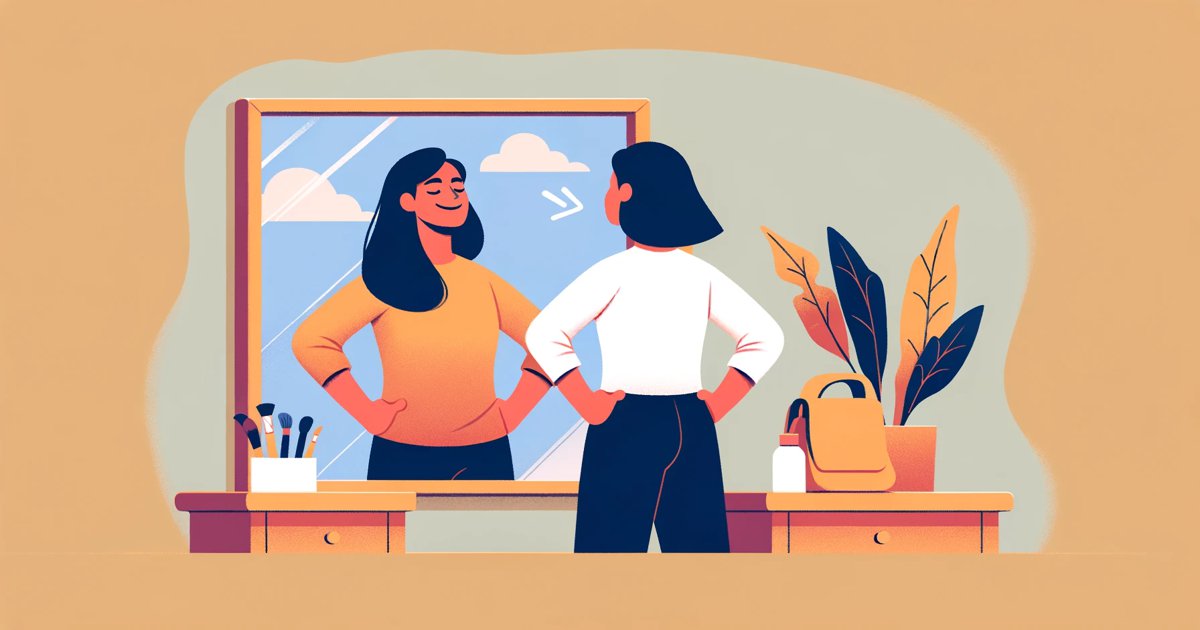
During the last time while on the subject of self-confidence I proposed that you establish a “Benevolent Inner Observer” as the counterweight to you “Inner Detractor” within yourself. It is meant to help you treat yourself a little more leniently and gently in your normal every day life as well as in times of stress and frustration, than you probably normally would. Most people with low self-esteem are very good at tearing themselves down and calling themselves names because they are not used at motivating and building themselves up. Today I would like you to take one step further and analyze your entire self-image one more time. If I am not totally off base with my assessment, you have been lots more generous with the darker colors while you simply ignored a lot of brightness and beauty. Continue reading ...

The Benevolent Inner Observer (Self Confidence, Part 3)

Today I am back to one of my favorite subjects on this Blog: The subject of self-confidence. Part 1 dealt with all sorts of reasons for a lack of self confidence, while in part 2 you already received your first tips how you may be able to question a potential innermost negative dialogue with yourself and how you may be able to replace it with one that should be more helpful. With this contribution I would like to try and give you some support in dealing a little more friendly with yourself in every day life.

Experience shows that people with a reduced sense of self worth like to live according the motto: “Love your neighbor more than yourself!” Surely a socially acceptable mantra and for those around you obviously quite comfortable and agreeable! However not a particularly fertile soil for the growth of a sound self-confidence and innermost equilibrium – and if one is inclined to believe the bible, even God is less exacting in his demands of us and He probably knows why… Continue reading ...

Dealing with negative thoughts (Self Confidence, Part 2)

As already discussed in Part 1, today we don’t deal with the potential reasons for an underdeveloped feeling of self worth but with helpful strategies to make some changes. Unfortunately, there is no magic formula that would help to change low self-confidence into a stronger sense of confidence over night. I personally don’t think much of weekend workshops when brain washing is supposed to change negative thinking into a positive attitude within a few hours. Our thought processes are the result of years, decades of evolution and programming and these patterns are deeply embedded. To change that takes lots of discipline, effort and time (after all, it took lots of effort and time to embed it in us that deeply, in the first place!) Therefore, the most important appeal to you going in: Please have patience with yourself! If you take too much on in the beginning and then are disappointed and blame yourself you are already in the middle of a totally counter productive process! Because now you put yourself down to begin with instead of dealing with yourself a little more lovingly and fairly. It is much smarter to set yourself small and attainable goals and not to give up if you occasionally have the feeling of not getting anywhere. It is worth it, I guarantee it! Continue reading ...

First impressions in a job interview: why they really matter

“You never get a second chance to make a first impression.“ How true! Personnel directors and job coaches have emphasized the importance of the first handshake and eye contact on the occasion of the first job interview for years. It is obvious that the first impression also plays a role when flirting. Indeed, a study at Princeton University clearly demonstrates how quickly the counterpart’s – at any rate temporary – judgment is reached. It states that we only have one tenth of a second to catch the interest of our opposite number. With a little bad luck we could well have landed on the trash dump of history’s flirts after that. Or have messed up the chance for a new job.

The study’s participants had to judge portrait pictures according to traits like “attractive”, “likeable”, “trustworthy”, “capable”, or “aggressive”. The photos initially appeared on the screen one tenth of a second, then half a second and finally for an entire second. Each time the test subjects had to give their evaluation and at the same time state how sure they were of their judgment. With one exception the test subjects did not change their assessment even after they had an opportunity to look at the picture for a longer period of time; then they were even more sure of their valuation. Social psychologists call this phenomenon the Halo-Effect that is actually based on an erroneous perception: A person’s individual characteristics create an overall impression that can be extremely persistent. For instance, classic examples are the assumptions “attractive” = „lovable, nice“, or “wearer of glasses” = “intelligent, wise”, “blond” = “dumb, ignorant” … etc. Continue reading ...

How to find a job that makes you happy

On iPersonic we do offer you important resources for your dream job search with our career test and our iPersonic Career Profile. An article I recently came across demonstrates the desperate need for this. Its content with the heading “Every third person dislikes his/her job” shocked me. The results of a representative survey conducted on behalf of the German Labor Union gives food for thought:

Of the 6168 questioned on average only 12% described their work as “good”, 54% as “mediocre” and for 34% it was just “bad”.

The numbers fluctuated somewhat depending on the professional branch; when asked the unskilled laborers – who is surprised – were especially dissatisfied. Not one of them liked his/her work and 61% responded to the question with “bad”. Temporary workers turned out to be above average unhappy, as well. One the other hand, engineers and members of professions involving natural sciences were satisfied with their work 23% above average while 21% were the most seldom dissatisfied. According to the study they have a “high measure of influence- and development opportunities, meaningful work, a minimum of physical and emotional stress, a commensurate income combined with a high degree of professional security and supportive, development- and learn conducive work organizations- and environments.” Continue reading ...

Learning to trust yourself (Self-Confidence, Part 1)

During recent conversations with my clients I frequently thought about how many of their concerns and emotional hardships were rooted in the concepts of self-confidence, self- respect, feeling of self-worth – or rather the lack of it. Whether you are the young man who is tired of being single but has lost almost all hope because he really can’t find anything worth loving in himself. Or the woman in her best years whose children are past the most difficult stages and now nothing stands in the way of her return to professional life – except her conviction that she won’t be up to a work day and its demands. Or the pretty girl in her mid twenties who has postponed a vital operation for much too long because the thought of a scar disfiguring her otherwise perfect body is just too terrible to contemplate. Somehow it’s always the same thing: “I don’t like myself.” “I am not good enough the way I am.” “I am useless unless I am perfect.” “I am incompetent.”

Self-confidence, the feeling of self-worth, self-esteem – in the final essence they are all rooted in self-respect and the appreciation of the strengths and weaknesses making us the person we are. Those who have been fortunate were given a healthy portion of it during childhood: They had parents whose demands were neither too high (and thus asking too much) nor too low (and thus lacking stimulus for an optimal development). They may have received many positive impulses from home and other people, experienced lots of love, affection and interest and therefore developed the feeling of being liked by others regardless of their own achievements. If they were truly children of the sun they were even fortunate with their friends and fellow students – these days described as a peer group. They were accepted, became a part and were made to feel comfortable and appreciated. Usually this represents the “fertile soil” for a pretty solid feeling of self-worth, the sense that one is alright and going to somehow manage dealing with life’s demands - albeit sometimes a little more easily than at others, but satisfactorily, nevertheless. Then one takes minor adversities or negative experiences in stride; they don’t begin diminishing one as a person in one’s own eyes. Continue reading ...

How the iPersonic Compatibility Color Coding System works

Today a few words about our color system and the principle behind it. You may have already asked yourself: "Why do they claim that similar colors stand for certain personality types that are a good match and what is this all about?"

In the vernacular we find two totally contradictory proverbs on the subject of attraction, love and friendship. All of us are familiar with: “Birds of a feather flock together” and the other one: “Opposites attract.” When one scientifically deals with the question why we feel more comfortable in the company of one person but not of another, you find that there is a lot of truth in the vernacular. Research tells us that to a point both principles have their justification.

In general, we instinctively prefer the company of people who are similar to ourselves regarding the important aspects of our personality, our origin and convictions. That stands to reason. In one respect this similarity makes dealing with them easier, communication works more smoothly, and all kinds of conflicts don’t even make their appearance because one agrees in the important matters anyway. This is obviously a lot more agreeable than endless discussions about every triviality in order to finally reach a compromise. Beyond that, we appreciate people who validate our view of the world rather than those seeing everything differently. This conformity is assuring and gives us self-confidence. Research even has a term for this phenomenon, i.e. choosing a partner: Homogeny. Multiple studies in a variety of scientific categories substantiate this tendency to choose someone similar. Continue reading ...

Intuition – Knowledge on a Gut-Level

Eight of our sixteen personality types in the third dimension prefer intuition to sensing: All Thinkers (0ppp, Groundbreaking, Independent and Dynamic) and all Idealists (Spontaneous, Engaged, Dreamy and Harmony-seeking). However, what does that actually mean for their every day life?

Neuroscientists have known this for a long time: Our consciousness is not even close to being able to handle all the information that continuously floods it. Consequently, it focuses on the immediate and important and continuously blocks the majority of external stimuli out. Just now, as you read this, your subconscious receives all kinds of signals which your consciousness deliberately ignores because otherwise you would not be able to concentrate on the text: information about your physical posture (or were you even aware up to now which parts of your body were touching the chair and which were touching the floor? how warm or how cold your hands are right now? or if a little tension in your neck is coming on?), a number of environmental information (brightness, background noises, temperature, the presence of a colleague sitting on the neighboring table…) and countless more things. All these informational units end up in your subconscious and with incredible speed are processed, evaluated, sorted and filtered. They are usually only transferred into the foreground – i.e. your consciousness – when they become urgent (when your chair collapses under you, for instance!). Continue reading ...

Discover your Strengths

As you know, our 16 Personality Types are distinguished by totally different preferences, dislikes and naturally also different strengths (and development potential, but that is not our subject today). For instance, the “Thinkers” are outstanding analyzers who can handle abstract and complex subjects especially well and for whom even the most complicated problem solutions are a breeze. The “Idealists” usually possess a special creativity and a sparkling charisma that frequently make them into gifted artists and fascinating conversationalists. One can only envy the “Doers” for their inexhaustible energy and drive just as for their uncomplicated pragmatism that stands them in good stead during tumultuous times. And nobody has as much staying power and determination where his/her objectives are concerned as the “Realists” who are also blessed with a sound common sense. (You can determine your professional strengths in our free career test).

These are only some examples – the list can obviously be increased at will and gets more differentiated when not just the four primary groups but also each type is considered individually. In every day life we always tend to concentrate on our weaknesses and mistakes. We all too easily loose sight of our strengths. That is how we remember it from our childhood (unless you were really fortunate with your parents, of course!) and that is how we often deal with our partners, as well (or have you praised yours for something he or she has done yet today?). Of course, if one wants to change something or make sure not to repeat a mistake, it sometimes makes sense to deal with one’s weaknesses. On the other hand those who are constantly wearing deficit-oriented spectacles are going to end up having a problem with their self-esteem and sooner or later will lack a healthy self-confidence. And after all, those are important requirements for a happy life. Continue reading ...

Follow the author


Topics